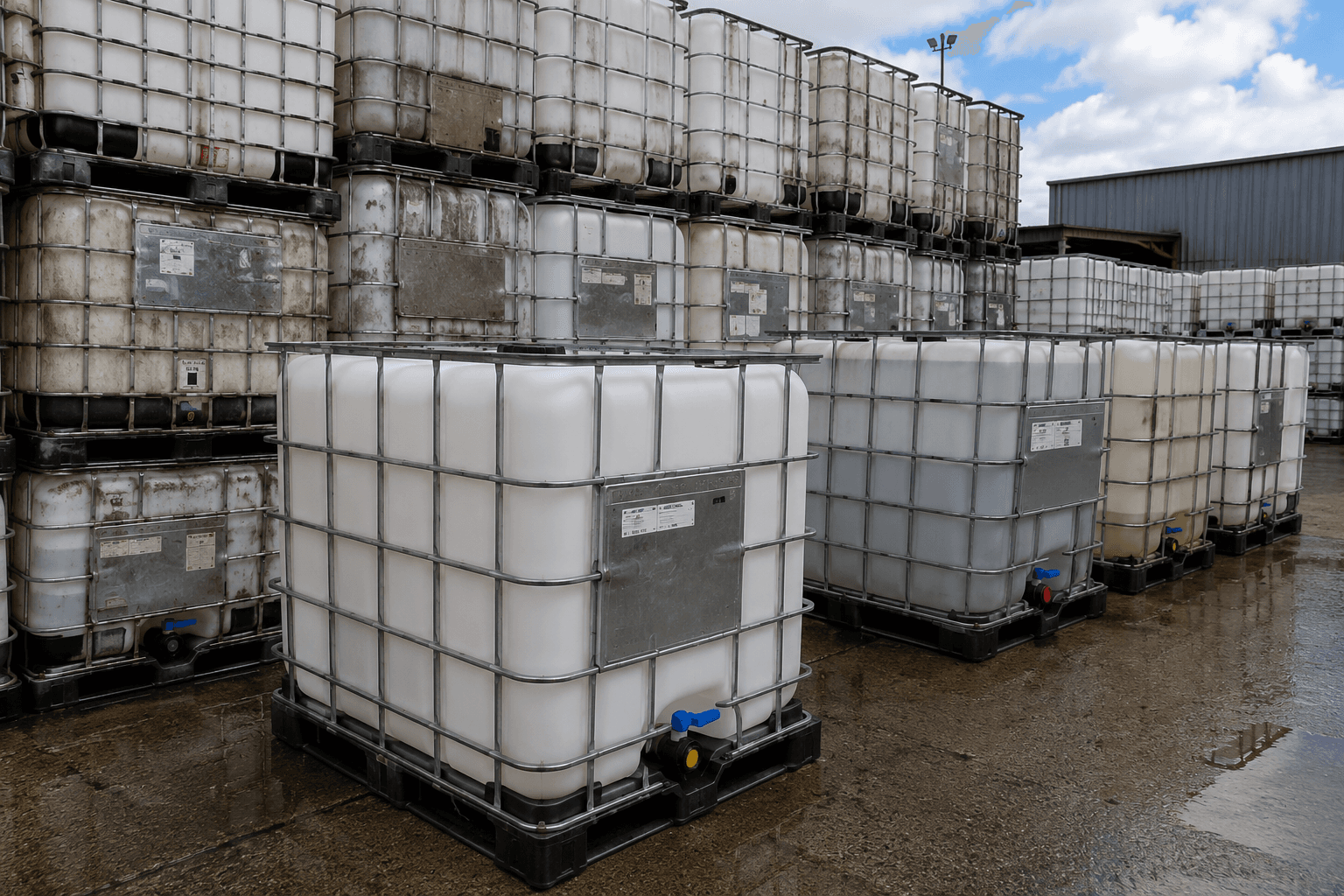
Sell Your Used IBCs.
Get Buyback Offers.
Empty IBC totes sitting in your yard are idle capital. Tell us what you have and partner suppliers in our network who buy back empty totes can make you an offer — with pickup arranged through the supplier. Requests are accepted from across the US; availability depends on partner suppliers.
Get Your Free Buyback Quote
Tell us about your IBCs and we'll pass your request to partner suppliers who buy used totes. No obligation.
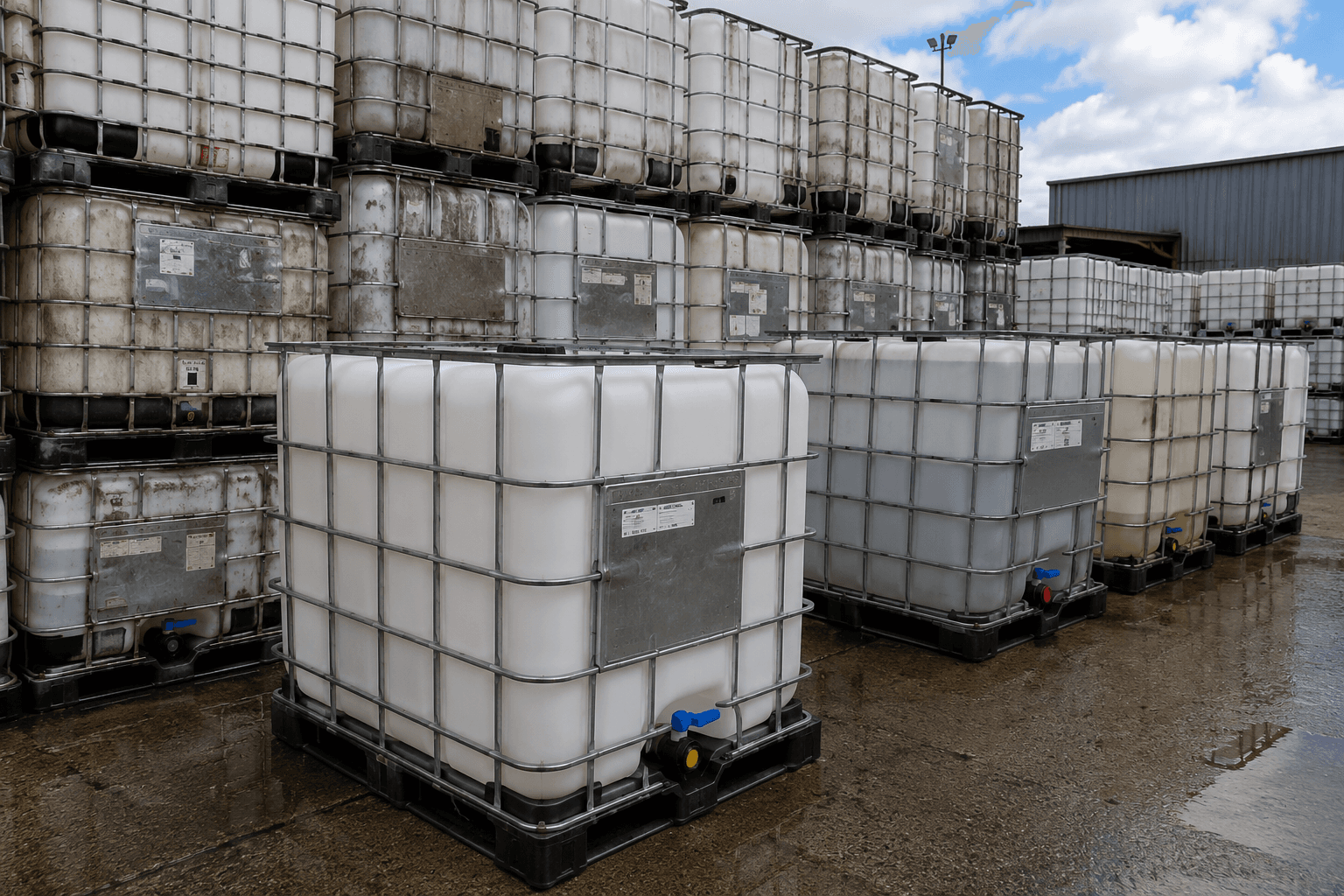
Turn Empty IBCs Into Cash
Whether you have 10 empty totes or 1,000, surplus containers can often be turned into revenue. We match you with partner suppliers who buy back empty totes, arrange pickup at your location, and make offers based on condition and volume.
275 & 330
Gallon composite totes
Buyback offers are by quote from partner suppliers and vary by grade, size, condition, region, and volume.
How the Buyback Program Works
From quote request to payment in four straightforward steps. Timing depends on the partner supplier and your location.
Submit Your Inventory
Fill out our quick quote form with the quantity, size, previous contents, and condition of your IBCs. Photos help partner suppliers give a more accurate offer.
Receive an Offer
We pass your request to partner suppliers in our network who buy back empty totes. They review the details and follow up with a no-obligation offer based on market conditions and container condition.
Arrange Pickup
If you accept an offer, pickup can be arranged through the partner supplier. They will confirm loading requirements, timing, and any freight costs with you directly.
Get Paid
Payment terms and methods are set by the buying supplier. Confirm how and when you will be paid before the totes leave your site.
What IBCs Partner Suppliers Buy
Partner suppliers buy composite IBCs (HDPE bottle in a steel cage) in a wide range of conditions. Here are the most common types on the used market.
275-Gallon Composite IBCs
Standard HDPE bottle on galvanized or powder-coated steel cage with 6" lid and 2" NPT bottom valve. The most common IBC in the US market.
330-Gallon Composite IBCs
Larger-format composite totes popular in food, beverage, and chemical applications. Same cage-and-bottle construction as the 275-gallon variant.
Rebottled / Reconditioned IBCs
Previously reconditioned totes with replacement bottles are commonly accepted. Cage condition and completeness of fittings are the primary valuation factors.
Food-Grade IBCs
Totes that previously held food-safe products (juices, syrups, oils, flavorings) often command a premium because they can be reconditioned for food-grade reuse.
Chemical-Grade IBCs
Containers used for non-hazardous chemicals, soaps, detergents, and industrial fluids. Value depends on the specific prior contents and residue level.
UN-Rated / DOT-Rated IBCs
Totes carrying a valid UN 31HA1 rating within their five-year service life are especially valuable due to their eligibility for regulated-goods transport.
What Determines Your Buyback Price
Buyers generally evaluate IBCs on the same core criteria. Understanding these factors helps you maximize the value of your empty totes.
Container Condition
Grade A (like new) totes with intact cages, no cracks, and clean bottles are typically worth considerably more than Grade C containers with dents or UV yellowing.
Previous Contents
Food-grade IBCs that held non-staining, non-odorous products tend to be the highest value. Totes that held dyes, adhesives, or strong solvents usually receive lower offers.
Quantity
Larger lots, up to a full truckload, generally receive better per-unit pricing because freight is spread across more totes. Some buyers will take single units; others set a minimum.
Valve & Lid Completeness
IBCs with intact butterfly valves, camlock fittings, and sealed lids score higher. Missing or damaged valves reduce the buyback offer.
Age & UV Exposure
HDPE degrades under UV light. Containers stored indoors or with UV-stabilized bottles retain more value than sun-bleached outdoor units.
Location
Distance to the buying supplier affects freight cost, which is usually reflected in the net offer. Being near a supplier in our network can improve the price you receive.
Pickup Through a Partner Supplier
When you accept an offer, pickup can be arranged through the partner supplier buying your totes. Depending on volume, suppliers typically use box trucks, flatbeds, or 53-foot dry vans — from a handful of IBCs up to a full truckload of double-stacked empties.
Pickup timing depends on the supplier's routes and your location. Requests are accepted from across the US; availability depends on partner suppliers, and sites near a supplier or on an existing route are usually easiest to schedule.
Forklift-accessible loading docks make pickup fastest. If you only have ground-level access, say so in your request so the supplier can plan for a liftgate or pallet jack.
Buyback vs. Disposal: The Smart Choice
Sell Through Our Partner Network
- Get offers for usable containers instead of paying to haul them
- Pickup arranged through the buying partner supplier
- Ask suppliers about recycling or reuse documentation
- Reusable totes go back into service; others can be recycled
- Supports your corporate sustainability goals
- Frees up valuable warehouse and yard space
- Ask suppliers whether recurring pickups are possible
Paying for Disposal
- Disposal fees add up for every container
- You arrange and pay for hauling
- Limited or no documentation provided
- Containers may end up in a landfill
- Little or no reuse benefit
- IBCs continue occupying your space until hauled
- No financial return — pure cost center
Every IBC You Sell Makes a Difference
Buyback keeps containers in circulation. Here is what typically happens to totes that are sold for reuse or recycling instead of being thrown away.
A tote in good condition can be cleaned, tested, and reused, which avoids manufacturing a new container.
When a bottle is worn out, the galvanized steel cage can often be fitted with a new bottle instead of being scrapped.
Partner recyclers separate HDPE, steel, and pallet materials for recycling where facilities accept them.
Every container that is reused or recycled is one fewer bulky item headed for disposal.
Condition Assessment Guide
Understanding how IBCs are commonly graded helps you estimate buyback value before submitting a quote request. Here is a typical four-tier system used in the industry; individual suppliers may grade slightly differently.
Grade A — Like New
Highest Buyback Value- Bottle is clear white with no yellowing, staining, or haze
- Cage is straight with no bent rails, dents, or rust spots
- All original fittings intact — valve, lid, gaskets in working condition
- Valid UN 31HA1 marking with more than 2 years of service life remaining
- Previously held food-grade or clean, non-staining products only
- Stored indoors or under cover with minimal UV exposure
Grade A totes can be cleaned and resold with minimal processing. These typically command the highest buyback offers because they require the least investment to return to service. Typical prior contents include water, food-grade glycerin, vegetable oils, and beverage syrups.
Grade B — Good Condition
Strong Buyback Value- Bottle shows minor yellowing or light residual staining that can be washed out
- Cage has minor cosmetic dents but no structural deformation
- Valve functional but may need gasket replacement
- UN rating may be within final 2 years of service life
- Previously held non-hazardous chemicals, soaps, or light industrial products
- Some outdoor storage acceptable if UV degradation is minimal
Grade B is one of the most common conditions on the used market. These IBCs are generally reconditionable — they just require more thorough cleaning, valve replacement, and possibly gasket work. Offers are usually solid, though somewhat below Grade A pricing for the same container type.
Grade C — Fair / Rebottle Candidate
Moderate Buyback Value- Bottle has significant yellowing, permanent staining, or mild stress cracks
- Cage is structurally sound but has visible dents, surface rust, or chipped coating
- Fittings may be missing or non-functional
- UN rating expired or approaching expiration
- Previously held stronger chemicals, dyes, or products that penetrated the HDPE
- Extended outdoor storage with visible UV degradation on bottle surface
Grade C totes are rebottle candidates — the cage is salvageable but the bottle will be replaced. Buyback value reflects the cost of a new bottle installation. Many buyers still pay for these containers because the steel cage alone holds real value, and rebottled IBCs are a popular lower-cost alternative to new units.
Grade D — Recycling Only
Base Recycling Value- Bottle is cracked, brittle, or heavily contaminated beyond cleaning
- Cage has structural damage — bent corner posts, broken welds, collapsed top rail
- Pallet base is rotted, cracked, or missing
- Container held RCRA-regulated materials or shows persistent chemical odor
- Multiple components missing — no valve, no lid, damaged fill port
- Severe UV degradation rendering the HDPE too brittle for any reuse
Grade D containers go to recycling rather than reconditioning. Depending on the supplier and market, they may earn a small payment based on HDPE and steel recovery value, or cost a modest fee — often still less than standard disposal. Ask your supplier about recycling documentation for your compliance records.
How Pickup Works — Step by Step
Pickup details vary by partner supplier, but here is what the process typically looks like from accepting an offer to receiving payment.
1. Scheduling
After you accept an offer, the partner supplier contacts you to agree on a pickup date and window. Let them know about dock hours, gate access, or other site restrictions up front, and ask them to confirm the vehicle type they plan to send.
2. Pre-Pickup Preparation
Stage IBCs on a flat, forklift-accessible surface as close to your loading dock or lot entrance as possible. Drain residual product thoroughly; ask the supplier whether rinsing is expected. Keep valves closed and lids on, and leave stacked totes stacked if they are stable.
3. Arrival & Inspection
At pickup, the driver typically verifies that the quantity and condition match the quote. If you have additional totes beyond the quoted amount, ask the supplier in advance whether they can be added to the load and at what price.
4. Loading
Loading depends on the vehicle and your site. With a dock and forklift, a full load of empties can be loaded quickly. Without dock access, the supplier may send a truck with a liftgate or bring a pallet jack. Empties are usually stacked and strapped to prevent cage damage in transit.
5. Documentation & Departure
Before the truck leaves, make sure you receive a bill of lading or pickup receipt showing the quantity loaded and your signature releasing the containers. Keep a copy for your records.
6. Payment
Payment is made by the buying supplier according to the terms agreed when you accepted the offer. Confirm the payment method, timing, and how any count or grade differences will be handled before pickup day.
Buyback Program Questions
What is the minimum quantity partner suppliers will buy?
How quickly will I get paid after pickup?
Do partner suppliers buy IBCs that held hazardous materials?
What if my IBCs are damaged or past their UN rating?
Do I need to clean the IBCs before selling them?
Can I set up a recurring pickup?
Can I get documentation for environmental reporting?
Ready to Cash In Your Empty IBCs?
Tell us what you have and we'll connect you with partner suppliers who buy back empty totes in your area.