Give Every IBC Tote
A Second Life
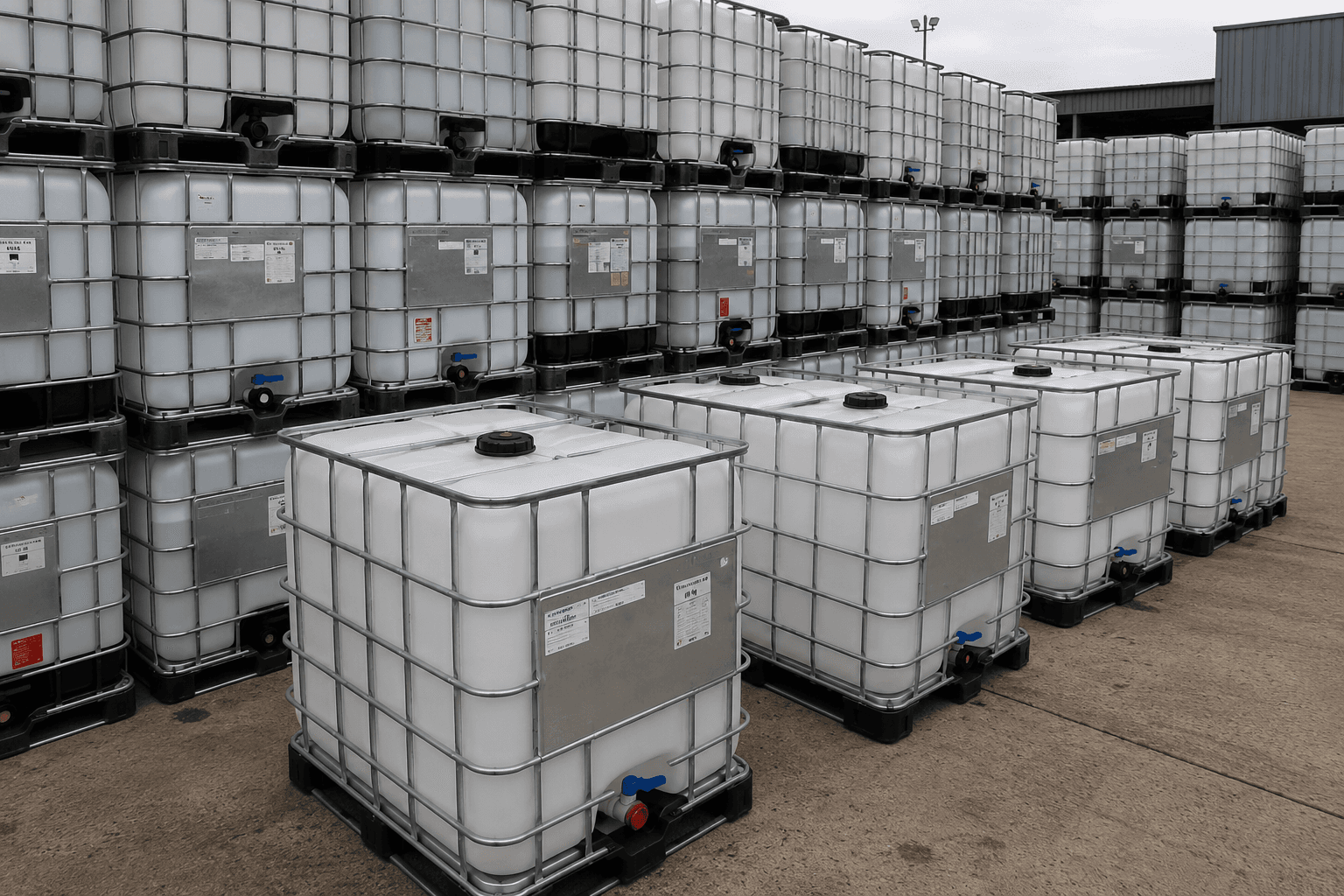
America's leading sustainable IBC recycler. We buy, sell, clean, recondition, and transport used Intermediate Bulk Containers — keeping thousands of tons of plastic out of landfills every year.
Get Your Free Quote
Whether you're buying, selling, or recycling IBC totes, we'll get you the best deal. Fill out the form and hear back within 24 hours.
IBC Totes for Every Need
Complete IBC Lifecycle Management
From buyback to recycling, cleaning to transportation — we handle every stage of the IBC tote lifecycle so you don't have to.
Eco Impact Calculator
See how much you save by recycling IBC totes with us.
The Greenest Choice in Bulk Containers
Zero Landfill Promise
Every IBC we handle is either reused, reconditioned, or its materials fully recycled. Nothing goes to waste.
Competitive Pricing
Used and reconditioned IBCs at a fraction of new cost. Plus, we pay top dollar for your empties.
Quality Guaranteed
Every container is pressure-tested, inspected, and graded. We stand behind every IBC we sell.
Nationwide Logistics
Pickup and delivery anywhere in the continental US. Full truckloads or single units.
Expert Consultation
Our team has decades of combined experience in bulk container management. We help you find the right solution.
Fast Turnaround
Same-week shipping on most orders. Large inventory means we can fulfill bulk orders quickly.
Ready to Go Green?
Join hundreds of businesses that trust USA IBC Recycle for sustainable bulk container solutions. Get a free quote today.
Trusted Across Every Sector
Intermediate Bulk Containers are the backbone of liquid and granular material handling across dozens of industries. We serve them all with tailored IBC solutions that meet strict regulatory and operational standards.
Food & Beverage
Food-grade IBC totes are essential for transporting syrups, edible oils, juice concentrates, sauces, and liquid sweeteners. The food and beverage industry requires containers that meet FDA 21 CFR standards and can withstand rigorous cleaning protocols between uses. Our reconditioned food-grade IBCs undergo a certified triple-wash process with hot alkaline solution, acid rinse, and sanitization to eliminate any residue or microbial contamination. We supply bakeries, bottling plants, dairy processors, and commercial kitchens with containers that deliver the hygiene standards they need at a fraction of the cost of new totes.
Chemical Manufacturing
Chemical producers rely on UN-rated IBC containers to safely store and transport hazardous and non-hazardous liquids including solvents, acids, bases, surfactants, and industrial cleaning agents. Compatibility between the container material and the chemical being stored is critical. Our team evaluates chemical compatibility for every order, ensuring that the polyethylene or stainless steel container we provide is rated for the specific substance. We maintain a large inventory of UN 31HA1-rated composite IBCs and can supply both new and reconditioned units for chemical applications where DOT compliance is non-negotiable.
Agriculture & Farming
Farms and agricultural operations use IBC totes for storing and dispensing fertilizers, pesticides, herbicides, liquid feed supplements, and irrigation water. The rugged cage-and-pallet design of IBCs makes them ideal for outdoor use in barns, fields, and storage yards where they may be exposed to UV, temperature swings, and heavy machinery. We supply farmers across the Midwest and beyond with affordable used IBCs that have been cleaned and inspected for agricultural use, helping them manage input costs without compromising on container integrity or safety.
Pharmaceuticals & Biotech
Pharmaceutical and biotech companies require the highest standards of cleanliness and traceability for their bulk liquid handling. IBC totes used in pharmaceutical settings must meet cGMP guidelines and often require detailed certificates of cleaning and chain-of-custody documentation. We provide both new and meticulously reconditioned IBCs for pharmaceutical-adjacent applications including excipient transport, purified water storage, and non-sterile bulk liquid handling. Every unit we supply for this sector comes with full cleaning records and lot traceability.
Water Treatment & Utilities
Municipal water treatment plants and private utilities use IBC totes to store and dose chemicals like sodium hypochlorite, ferric chloride, polymer flocculants, and pH adjustment chemicals. These operations often run through dozens of IBCs per month, making cost efficiency critical. Our buyback and reconditioned supply programs allow water treatment facilities to return their empties for credit while receiving freshly reconditioned units on a rotating schedule, dramatically reducing their per-unit container costs while maintaining compliance with state environmental regulations.
Automotive & Manufacturing
Automotive plants and general manufacturers use IBCs to manage coolants, lubricants, cutting fluids, paints, adhesives, and cleaning solvents used on the production line. Downtime caused by container shortages can be extremely costly in these high-throughput environments. We maintain standing inventory agreements with several manufacturing facilities, guaranteeing next-day availability of cleaned and inspected IBCs to keep production lines running. Our logistics team coordinates scheduled pickups of empty containers so they never pile up on the shop floor.
Construction & Concrete
Construction sites and ready-mix concrete operations use IBC totes to store water, liquid admixtures, curing compounds, form release agents, and dust control solutions. Containers in this sector take a beating from job-site conditions, making the economic case for used IBCs especially compelling. We supply construction companies with robust used totes that still have years of service life at prices 40 to 60 percent below new. When those containers reach end of life, our recycling program ensures the materials are recovered rather than dumped in a roll-off.
Wine, Spirits & Craft Beverage
Wineries, distilleries, and craft beverage producers use food-grade IBC totes for fermentation, blending, storage, and transfer of wine, spirits, cider, and brewing ingredients. These operations demand containers free of any off-odors or residual flavors that could taint a batch. Our food-grade reconditioning process includes organoleptic testing—a human sensory evaluation—to verify that each container is free of any detectable odor before it ships. We work with craft producers from Michigan to California who appreciate the sustainability story of reused containers as much as the cost savings.
From Collection to Delivery
Every IBC tote that passes through our facility follows a rigorous five-stage process designed to maximize container lifespan, ensure safety compliance, and minimize environmental impact.
Collection & Pickup
Our process begins when a business contacts us with empty or surplus IBC totes. We coordinate pickup logistics based on volume, location, and scheduling requirements. For clients within our core Midwest service area, we typically arrange pickup within 48 to 72 hours. For nationwide clients, we work with our carrier network to secure competitive freight rates and efficient routing. Our drivers are trained in proper IBC handling and securement to prevent damage during transit. We pick up everything from single units at small operations to full truckloads of 56 or more totes at major manufacturing facilities. Each container is tagged at pickup with a unique tracking ID that follows it through every subsequent stage of our process.
Inspection & Grading
When totes arrive at our Grand Rapids facility, every single unit undergoes a comprehensive inspection. Our trained technicians evaluate the structural integrity of the outer steel cage, checking for bent or broken bars, damaged corners, and compromised welds. The inner HDPE bottle is inspected for cracks, UV degradation, warping, and chemical staining. The valve assembly is tested for proper operation and seal integrity. The pallet base is checked for cracks, forklift damage, and load-bearing capacity. Based on this inspection, each IBC is graded into one of four categories: Grade A (suitable for food-grade reconditioning), Grade B (suitable for industrial reconditioning), Grade C (usable as-is for non-critical applications), or Grade R (recycling only). This grading system ensures that every container is matched to an appropriate second life.
Cleaning & Reconditioning
Containers graded for reconditioning enter our professional cleaning line. The process begins with a high-pressure pre-rinse to remove loose residue and debris. Next, the container is filled with a heated alkaline cleaning solution and agitated using our automated rotary spray system, which reaches every interior surface including corners and the valve cavity. After draining, an acid rinse neutralizes any remaining alkaline residue and removes mineral deposits. For food-grade containers, an additional sanitization step uses a food-safe antimicrobial solution. Containers are then inverted and air-dried in our climate-controlled drying bay. Reconditioning also includes replacing worn or damaged valves, gaskets, and caps with new OEM-spec components. Bottles with minor cosmetic damage are retained, while those with structural issues are replaced entirely with new HDPE bottles, a process known as rebottling. The finished reconditioned IBC is virtually indistinguishable from a new container in terms of function and cleanliness.
Quality Assurance & Testing
Before any reconditioned IBC leaves our facility, it must pass our quality assurance protocol. This includes a hydrostatic pressure test where the container is filled with water and pressurized to verify there are no leaks in the bottle, valve, or gasket. The valve is cycled open and closed multiple times to confirm smooth operation and proper sealing. For food-grade units, we perform an organoleptic test where trained staff evaluate the container for any residual odors that could indicate incomplete cleaning. We also verify that all labeling, date codes, and UN markings are accurate and legible. Each container receives a QA sticker with the date of reconditioning, the technician ID, and the grade designation. We maintain digital records of every QA inspection for a minimum of three years, providing full traceability should any questions arise after sale.
Delivery & Ongoing Support
Once an IBC passes quality assurance, it is staged in our shipping bay organized by grade and type for efficient order fulfillment. We offer flexible delivery options including full truckload shipments of 56 or more totes for the best per-unit freight cost, LTL (less-than-truckload) shipments for smaller orders, and local delivery via our own fleet within a 150-mile radius of Grand Rapids. Our team handles all shipping logistics, provides tracking information, and coordinates delivery windows with receiving docks. But our relationship does not end at delivery. We offer ongoing buyback agreements where we pick up your empties on a recurring schedule, credit your account, and deliver fresh reconditioned units—creating a seamless circular supply chain that saves you money and keeps plastic out of landfills.
The Numbers That Matter
Every IBC tote we recondition and return to service is one less container manufactured from virgin plastic. Here is the cumulative environmental impact our operations have achieved since our founding.
Plastic Diverted from Landfills
Each IBC tote contains approximately 130 pounds of high-density polyethylene. By reconditioning and reusing containers instead of discarding them, we have kept over 2,340 tons of HDPE plastic from entering landfills and waterways since we began operations.
Water Saved vs. New Manufacturing
Manufacturing a new IBC from raw materials requires significant water for resin production, molding, and cooling. Our reconditioning process uses a fraction of that water. Across all containers we have reconditioned, the cumulative water savings compared to new manufacturing exceeds 4.7 million gallons.
Carbon Footprint Reduction
A lifecycle analysis shows that reconditioning an existing IBC produces roughly 85 percent less carbon dioxide equivalent emissions than manufacturing a new one from virgin HDPE resin. This accounts for raw material extraction, polymerization, blow molding, cage fabrication, and transportation.
Steel Recycled and Recovered
The galvanized steel cage surrounding each IBC is one of the most recyclable components. When a cage reaches end of life, we separate it and route it to regional steel recyclers. To date, we have recovered and recycled over 1,180 tons of steel, feeding it back into the domestic metals supply chain.
Total IBCs Given a Second Life
Through cleaning, reconditioning, rebottling, and resale, we have returned more than 62,000 IBC totes to active service. Each of those containers represents a new unit that did not need to be manufactured, shipped from overseas, or purchased at full price.
Containers Sent to Landfill
We maintain a strict zero-landfill policy. Every IBC we handle is either reconditioned for reuse or fully broken down into its component materials—HDPE plastic, steel, and wood—each of which is recycled through certified processors. Nothing is wasted.
Real Results for Real Businesses
We measure our success by the measurable impact we create for our customers. Here are a few examples of how we have helped businesses reduce costs and improve their sustainability profile.
Michigan-Based Food Processor
The Challenge
A mid-size food processing company in western Michigan was spending $180 per unit on new food-grade IBC totes, purchasing roughly 40 units per month to keep up with their production of fruit concentrates and flavored syrups. Their used totes were accumulating in a storage yard behind the plant, and they were paying a waste hauler $1,200 per month to remove them. The total annual cost of IBC containers—purchasing new and disposing of used—exceeded $100,000.
Our Solution
We implemented a full-cycle buyback and supply program. Each month, our truck picks up their 40 empty totes and delivers 40 freshly reconditioned food-grade IBCs. We pay them $25 per empty tote returned and charge $95 per reconditioned unit—a $85 savings over new containers. The company eliminated their waste hauler expense entirely.
The Result
Annual IBC container costs dropped from over $100,000 to approximately $33,600, a savings of more than 66 percent. The company also reduced their Scope 3 carbon emissions from packaging procurement by an estimated 38 tons of CO2 equivalent per year, a metric they now feature in their sustainability report to retail buyers.
Ohio Chemical Distributor
The Challenge
A chemical distribution company in northeast Ohio was struggling with inconsistent quality from their previous used IBC supplier. They had experienced three product contamination incidents in a single year caused by inadequately cleaned containers, resulting in costly batch rejections and strained relationships with their end customers. They needed a reliable source of properly cleaned and UN-rated IBCs for distributing industrial solvents and cleaning agents.
Our Solution
We worked with their quality assurance team to develop a customized container specification. Every IBC we supply to this client undergoes our standard cleaning process plus an additional solvent-specific rinse cycle and a 48-hour off-gas period. Each container ships with a certificate of cleaning that documents the wash chemistry used, water temperature, contact time, and the results of a cleanliness verification test. We assigned a dedicated account manager to handle their bi-weekly orders and maintain a safety stock of 20 containers at our facility.
The Result
In the 18 months since switching to USA IBC Recycle, the company has experienced zero contamination incidents. Their container costs decreased by 42 percent compared to their previous supplier, and the consistency of supply has allowed them to reduce their on-site container inventory by 30 units, freeing up valuable warehouse space. The relationship has since expanded to include containers for a new product line of water-based degreasers.
Texas Agricultural Cooperative
The Challenge
A large agricultural cooperative in central Texas needed a cost-effective way to distribute liquid fertilizer and crop protection products to its member farms spread across a 200-mile radius. They were purchasing new IBCs and discarding them after a single use cycle, generating significant plastic waste and spending upwards of $150 per container. With seasonal demand spikes during spring planting, they often faced container shortages that delayed product distribution to member farms.
Our Solution
We established a regional container pool program for the cooperative. We delivered an initial fleet of 300 reconditioned IBCs at $75 per unit. As member farms empty the containers, they return them to designated collection points. We pick up empties monthly, transport them to our facility for cleaning and reconditioning, and return them to the cooperative for redistribution. During peak season, we supplemented their fleet with additional containers from our standing inventory to prevent shortages.
The Result
The cooperative cut its annual container expenditure by 55 percent in the first year. Container shortages during planting season were eliminated thanks to the pooled inventory model. The program diverted an estimated 12 tons of HDPE plastic from disposal annually. Member farms appreciated the convenience of local drop-off points, and the cooperative now markets the program to its members as a tangible sustainability initiative that differentiates them from competing distributors.
Craft Beverage Producer in the Pacific Northwest
The Challenge
A growing craft cider and kombucha producer in Oregon was scaling from small-batch production to regional distribution. They needed food-grade IBCs for juice concentrate storage, fermentation, and transfer but had a limited capital budget. Purchasing new food-grade totes at $200 or more each was not feasible at the volumes they needed. They also wanted containers that aligned with their brand commitment to sustainability and local sourcing.
Our Solution
We sourced a batch of 25 Grade A food-grade reconditioned IBCs that had previously held food-grade vegetable oils, a compatible prior content for beverage applications. Each container underwent our full food-grade cleaning protocol including organoleptic testing to ensure no residual odor. We shipped them via LTL freight to their facility in the Willamette Valley. We also set up a standing quarterly order so they can scale their container fleet in step with production growth.
The Result
The producer saved over $3,000 on their initial container purchase compared to buying new. They have since placed three additional quarterly orders as their distribution expanded into Washington and Northern California. The founder features their use of reconditioned containers in the sustainability section of their website and on the story panel of their product packaging, noting that each tote they reuse keeps roughly 130 pounds of plastic out of the waste stream.
Serving All 48 Continental States
From our home base in Grand Rapids, Michigan, we have built a logistics network that reaches every corner of the continental United States. Whether you need a single tote or a full truckload, we deliver.
Midwest
1-2 Business DaysKey Cities: Grand Rapids, Detroit, Chicago, Indianapolis, Columbus, Milwaukee, Minneapolis, St. Louis, Cincinnati, Cleveland
Our home territory. We maintain the largest inventory and fastest turnaround for Midwest customers. Local delivery via our own fleet is available within 150 miles of Grand Rapids at no additional freight cost for orders of 10 or more totes.
Northeast
2-3 Business DaysKey Cities: New York, Boston, Philadelphia, Pittsburgh, Baltimore, Hartford, Newark, Buffalo, Albany, Providence
High demand from chemical distributors, food processors, and pharmaceutical companies in the Northeast corridor. We run dedicated loads weekly to the I-95 corridor and can coordinate multi-stop deliveries to reduce per-unit freight costs for smaller orders.
Southeast
2-4 Business DaysKey Cities: Atlanta, Charlotte, Nashville, Tampa, Orlando, Miami, Raleigh, Birmingham, Memphis, Jacksonville
Growing demand from agricultural operations, beverage producers, and water treatment facilities across the Southeast. We partner with regional carriers to provide competitive LTL rates and offer pool distribution through hubs in Atlanta and Nashville.
Southwest
3-5 Business DaysKey Cities: Houston, Dallas, San Antonio, Austin, Phoenix, Albuquerque, Tulsa, Oklahoma City, El Paso, Las Vegas
Texas and the broader Southwest are among our fastest-growing markets. Oil and gas operations, agricultural cooperatives, and food production facilities throughout the region rely on our consistent supply. We maintain a small staging inventory in the Dallas-Fort Worth area for expedited Southwest fulfillment.
West Coast
4-6 Business DaysKey Cities: Los Angeles, San Francisco, San Diego, Portland, Seattle, Sacramento, San Jose, Fresno, Long Beach, Oakland
We serve wine producers in Napa and Sonoma, food processors in the Central Valley, and manufacturers across the West Coast. Full truckload shipments to California typically transit in four days. For time-sensitive orders, we offer expedited freight options that cut transit to two to three days.
Mountain & Plains
3-5 Business DaysKey Cities: Denver, Salt Lake City, Boise, Kansas City, Omaha, Des Moines, Wichita, Billings, Fargo, Rapid City
Agricultural and industrial customers across the Mountain West and Great Plains benefit from our flexible delivery scheduling. We coordinate shared loads along major corridors including I-70, I-80, and I-90 to keep freight costs manageable for customers in lower-density markets.
Frequently Asked Questions
New to IBC totes or looking to deepen your understanding? Here are detailed answers to the questions we hear most often from customers and industry professionals.
What is an IBC tote?
An Intermediate Bulk Container, commonly called an IBC tote or IBC tank, is a reusable industrial container designed for storing and transporting bulk liquids and granulated materials. The most common type is the composite IBC, which features a high-density polyethylene (HDPE) inner bottle surrounded by a tubular galvanized steel cage, all mounted on an integrated pallet base. Standard capacities are 275 gallons (1,041 liters) and 330 gallons (1,249 liters). IBCs are designed to be stackable, forklift-compatible, and compatible with standard pallet racking, making them one of the most space-efficient bulk liquid storage options available. They are used across virtually every industry that handles liquids in volumes larger than drums but smaller than tanker trucks.
How long do IBC totes last?
The service life of an IBC tote depends on several factors including the contents stored, UV exposure, mechanical handling, and how well the container is maintained between uses. Under typical industrial conditions, the HDPE inner bottle has an effective service life of five to seven years before UV degradation and material fatigue compromise its structural integrity. The outer steel cage and pallet base often last much longer, frequently ten or more years. Through reconditioning, the HDPE bottle can be replaced (a process called rebottling) while retaining the original cage and pallet, effectively extending the usable life of the overall container by several additional years. With proper handling and periodic reconditioning, an IBC system can serve a business reliably for a decade or more.
What is the difference between food-grade and industrial-grade IBCs?
Food-grade IBCs are manufactured from FDA-compliant HDPE resins and are intended for contact with food products, potable water, or ingredients used in food and beverage production. They must meet FDA 21 CFR 177.1520 standards for food-contact surfaces. Industrial-grade IBCs may be made from the same base material but are not certified for food contact and may have previously held non-food chemicals, cleaning agents, or other industrial liquids. When we recondition a food-grade IBC, we maintain its food-grade status by ensuring it only receives food-compatible prior contents and undergoes our certified cleaning process. An IBC that has ever held a non-food chemical cannot be recertified as food-grade regardless of how thoroughly it is cleaned. This distinction is critical for food safety compliance and is one reason we meticulously track the content history of every container we handle.
Can IBC totes be used to store drinking water?
Food-grade IBC totes made from FDA-compliant HDPE can technically be used to store potable water, and many agricultural operations and emergency preparedness applications use them for exactly this purpose. However, there are important caveats. The container must be a new or properly reconditioned food-grade unit that has never held any non-food substance. The HDPE material should be opaque to inhibit algae growth, and the container should be stored out of direct sunlight when possible. For long-term potable water storage, the water should be treated and the container sanitized before filling. We recommend using only our Grade A food-grade reconditioned IBCs or new food-grade units for any application involving drinking water, and we can advise you on proper preparation and storage protocols.
What do the UN markings on an IBC mean?
The United Nations (UN) markings stamped or printed on an IBC tote provide critical information about the container certification and capabilities. A typical marking like "UN 31HA1/Y/0520/USA/M-1234" breaks down as follows: "31HA1" indicates the container type (31 = IBC for liquids, H = rigid plastic with structural equipment, A1 = fitted with a bottom discharge valve). The letter after the slash indicates the performance level: "X" is the highest rating suitable for hazardous materials in Packing Groups I, II, and III; "Y" is rated for Packing Groups II and III; "Z" is for Packing Group III only. The date code indicates the month and year of manufacture, the country code indicates where it was certified, and the final alphanumeric sequence is the manufacturer code. These markings are essential for DOT compliance when shipping hazardous materials and must be legible and intact. During our reconditioning process, we verify and preserve all UN markings.
How much does a used or reconditioned IBC tote cost?
Pricing for used and reconditioned IBC totes varies based on grade, condition, capacity, and order volume. As a general guide, used IBC totes in good structural condition but without professional cleaning typically range from $50 to $85 per unit. Reconditioned IBCs that have undergone our full cleaning and inspection process generally range from $85 to $130 for industrial-grade and $100 to $150 for food-grade units. Rebottled IBCs, which feature a new HDPE bottle in an existing cage, range from $130 to $175. For comparison, a brand-new composite IBC typically costs between $180 and $280 depending on the manufacturer and specifications. Volume discounts are available for orders of 20 or more units, and our buyback program can offset costs further. Contact us for a custom quote based on your specific requirements.
What should I do with IBCs that are no longer usable?
IBC totes that have reached the end of their usable life should never be sent to a general landfill. The HDPE plastic, steel, and wood or plastic pallet components are all recyclable through proper channels. Our recycling program accepts end-of-life IBCs regardless of condition. We break each container down into its component materials: the HDPE bottle is shredded and processed into recycled resin pellets that feed the manufacturing of drainage pipe, plastic lumber, and other durable goods. The steel cage is separated and sent to regional metal recyclers. Wooden pallets are chipped for mulch or biomass fuel, while plastic pallets are recycled with the HDPE stream. We offer free pickup for batches of 20 or more end-of-life IBCs, and we pay a nominal recovery fee for larger volumes. This ensures that 100 percent of the material is recovered and nothing ends up in a landfill.
Do you offer IBC tote rental or lease programs?
While we do not operate a formal rental program, our buyback and exchange model functions similarly to a lease arrangement and is often more cost-effective. Here is how it works: you purchase reconditioned IBCs from us at our standard pricing. When you have finished using them, we buy them back at a predetermined price, typically $20 to $30 per unit depending on condition. The net cost per use cycle is often lower than what traditional rental companies charge, and you have the flexibility to keep containers longer if needed without incurring daily rental fees. For customers with predictable, recurring container needs, we also offer scheduled exchange agreements where we deliver reconditioned units and pick up empties on a set cadence, weekly, bi-weekly, or monthly, with consolidated invoicing that simplifies your procurement process.