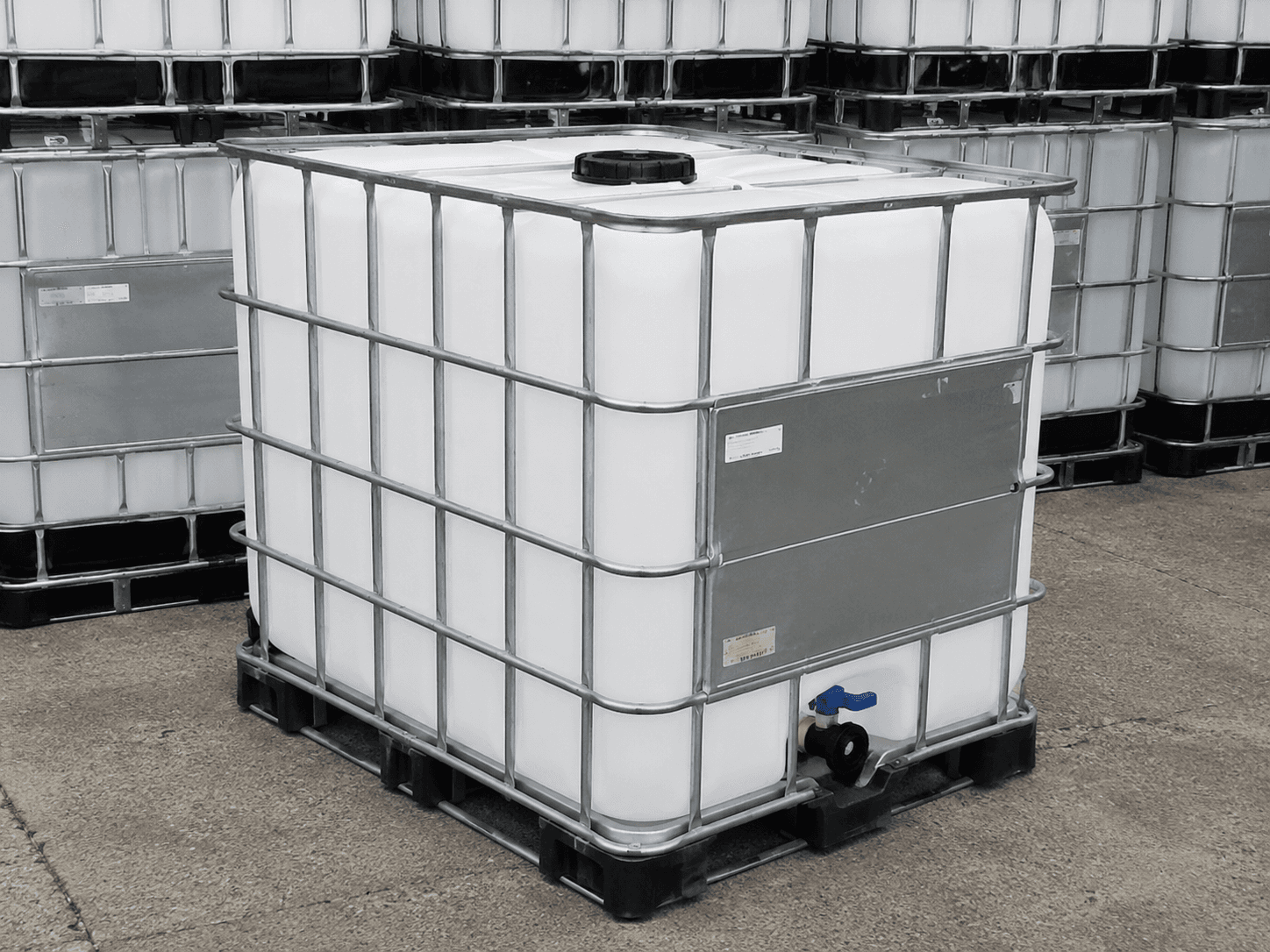
Used IBC Totes
For Sale
Quality-inspected 275 and 330 gallon Intermediate Bulk Containers at up to 60% less than new. Every tote is graded, pressure-tested, and ready to ship from our Grand Rapids, MI facility.
Request a Quote on Used IBC Totes
Tell us the size, grade, and quantity you need. We will respond with pricing and availability within 24 hours.
Available Sizes & Specs
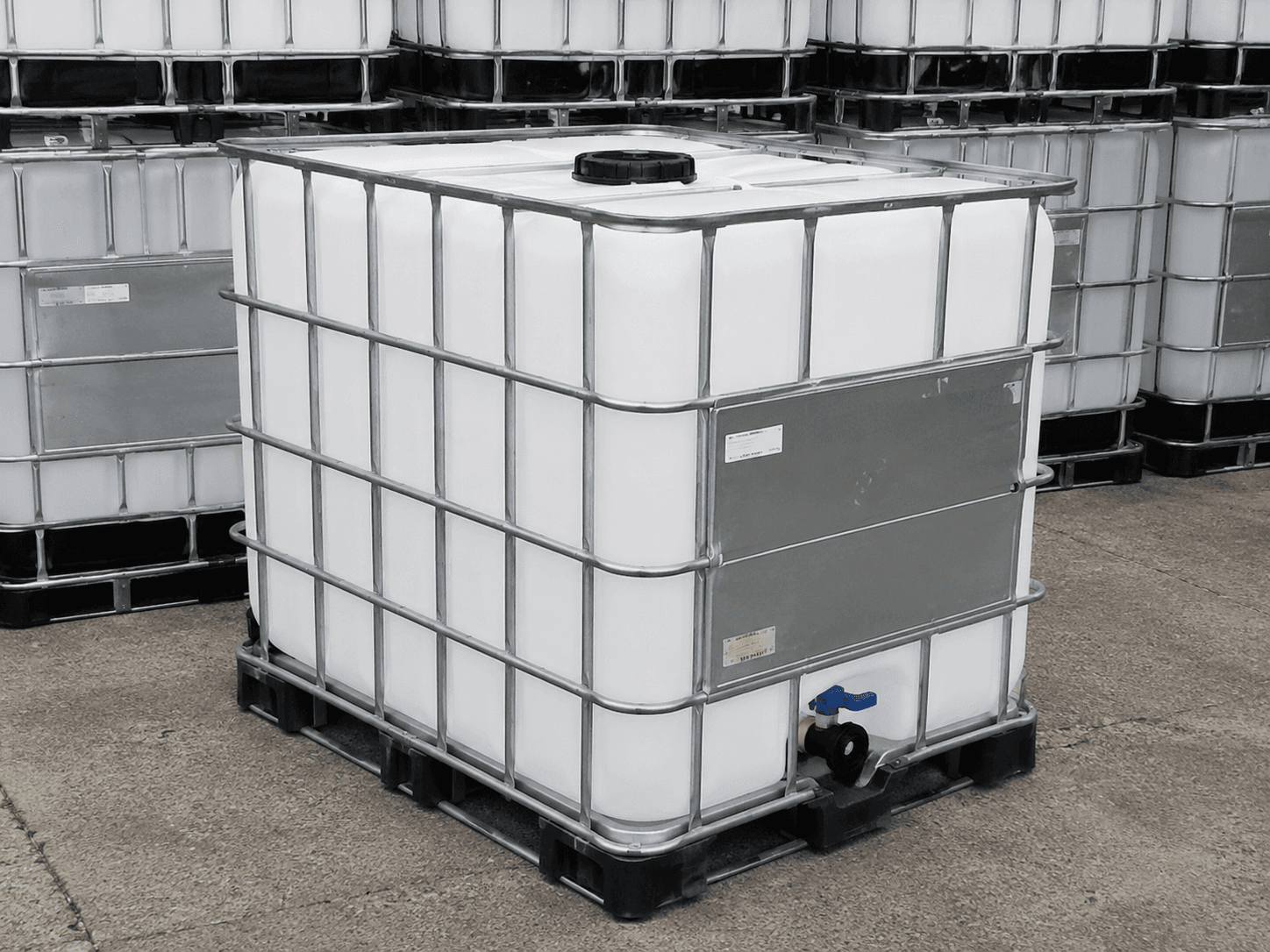
We stock both standard IBC sizes to meet the full range of industrial, agricultural, and commercial storage requirements.
275 Gallon
1,040 Liters
330 Gallon
1,249 Liters
Our IBC Grading System
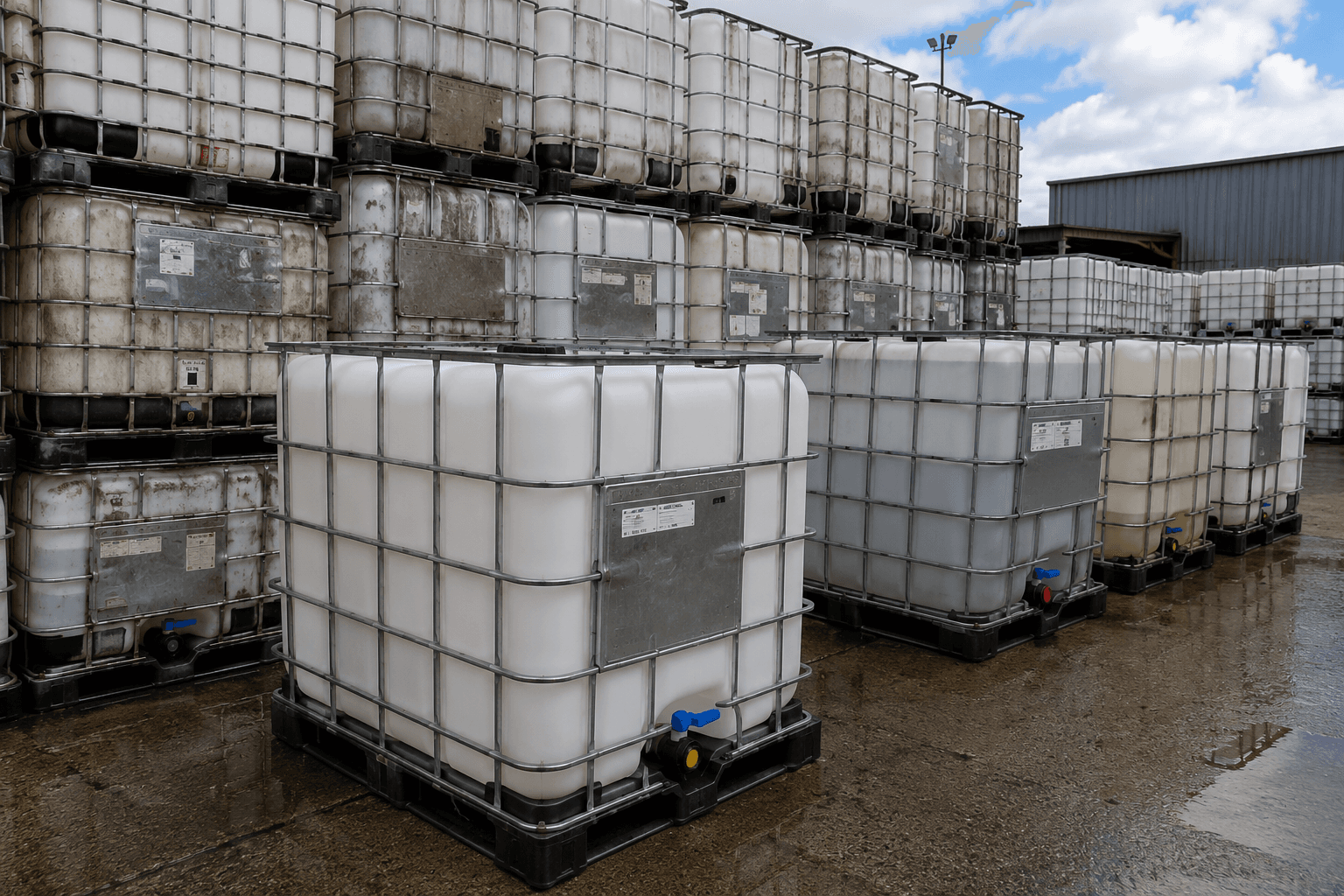
Every used IBC tote we sell is individually inspected and assigned a grade based on bottle clarity, cage condition, pallet integrity, and valve function. You always know exactly what you are getting.
Single-use containers that previously held food-grade or non-hazardous materials. The HDPE bottle is clear or lightly tinted with minimal scuffing. The steel cage is straight and free of significant rust. The pallet base is structurally sound with no cracks. These totes are ideal for potable water storage, food processing, beverage production, and pharmaceutical-adjacent applications.
Inspection Criteria
- Bottle clarity: 80-100%
- No chemical staining or odor
- Cage integrity: Excellent
- Valve: Fully functional, no leaks
- Pallet: No cracks or warping
- Label residue: Minimal or none
Containers that have been used one to three times for non-hazardous liquids. The HDPE bottle may show some yellowing or light staining but remains structurally intact. The steel cage may have minor dents or surface rust that does not compromise structural integrity. These totes are well-suited for agricultural chemicals, cleaning solutions, industrial water storage, and general non-food liquid transport.
Inspection Criteria
- Bottle clarity: 50-80%
- Light staining acceptable
- Cage integrity: Good (minor dents OK)
- Valve: Functional, may show wear
- Pallet: Structurally sound
- Label residue: Some present
Containers that have been through multiple use cycles. The HDPE bottle may be opaque, stained, or discolored. The cage may have visible dents or moderate rust. The pallet may show wear but remains functional for static storage. These totes offer the best value for non-critical applications such as rainwater collection, irrigation, waste containment, and static storage where cosmetic appearance is not a concern.
Inspection Criteria
- Bottle clarity: Below 50%
- Staining and discoloration present
- Cage integrity: Fair (dents, surface rust)
- Valve: Functional but worn
- Pallet: Functional, may have repairs
- Best value per gallon of storage
IBC Tote Materials & Construction
HDPE Bottle
The inner bottle is blow-molded from High-Density Polyethylene (HDPE), a thermoplastic known for its excellent chemical resistance, UV stability, and FDA food-contact compliance. HDPE does not leach harmful chemicals and withstands temperatures from -40F to 140F. The bottle is translucent for visual fill-level monitoring and has a standard 6-inch (150mm) screw cap on top for filling and a 2-inch NPS discharge valve at the base.
Steel Cage
The external cage is constructed from galvanized or powder-coated tubular steel, welded into a rigid lattice framework. This cage provides structural support during stacking, protects the bottle from impact and puncture, and enables secure strapping during transport. The cage is designed to support a full tote stacked two-high and withstand the rigors of forklift handling, truck loading, and warehouse storage.
Pallet Base
The integrated pallet base provides 4-way forklift entry and is available in three materials: steel (most durable, longest lifespan), composite (plastic-wood blend, lightweight, rot-resistant), and wood (economical, widely compatible). The pallet is permanently bonded to the cage and designed to standard 48" x 40" dimensions for compatibility with American pallet racking and truck trailers.
Common Applications
Used IBC totes serve thousands of applications across every industry. Here are the most popular ways our customers put them to work.
Agriculture & Farming
Fertilizer storage, pesticide mixing, livestock watering systems, and irrigation water reserves. Used IBC totes are the go-to container for farms nationwide.
Manufacturing
Coolant storage, process water, raw material handling, and waste collection in production facilities. Cost-effective bulk storage for any factory floor.
Food & Beverage
Grade A totes for juice concentrates, syrups, cooking oils, and potable water. Food-grade HDPE is FDA-compliant and safe for consumable products.
Chemical Processing
Non-hazardous chemical storage, solvent recovery, and process intermediates. Always match the container grade to the chemical compatibility requirements.
Construction
Water for concrete mixing, dust suppression, equipment washing, and temporary site water supply. Rugged steel cages handle jobsite conditions.
Rainwater Harvesting
Grade C totes are perfect for residential and commercial rainwater collection. Connect multiple totes for expanded storage capacity at a fraction of tank pricing.
Why Buy Used Instead of New?
Save 40-60% on Every Container
A new 275-gallon IBC tote typically costs $280-$400. Our Grade A used totes start as low as $100-$160, delivering the same storage capacity at a fraction of the price.
Same Performance, Lower Cost
HDPE is engineered for multiple use cycles. A Grade A or B used tote provides the same liquid containment performance, chemical resistance, and structural integrity as new.
Immediate Availability
New IBC totes can have 4-8 week lead times from manufacturers. We maintain a standing inventory of thousands of used totes ready for immediate pickup or shipment.
Volume Discounts
Ordering 10 or more? Our per-unit pricing drops significantly with volume. Full truckloads (56-60 totes) unlock our lowest possible rates.
Cost Comparison
*Prices shown are approximate per-unit cost. Actual pricing depends on quantity, location, and availability.
How We Source Our Used IBCs
Our supply chain is built on long-standing relationships with manufacturers, distributors, and logistics companies across the Midwest and nationwide. Here is how a used IBC tote gets from its first life to your facility.
Direct Manufacturer Pickups
We maintain scheduled pickup routes with food and beverage manufacturers, chemical producers, and consumer goods companies throughout Michigan, Ohio, Indiana, Illinois, and Wisconsin. These companies use IBC totes to receive raw materials -- once the contents are consumed in production, the empty totes are collected by our fleet. This direct relationship means we know exactly what was stored in every container, giving us full traceability from source to sale.
Distribution Center Returns
Large distributors of cleaning products, agricultural chemicals, and industrial fluids receive goods in IBC totes and need a reliable partner to remove the empties. We provide scheduled trailer drop service at distribution centers -- leaving an empty trailer on-site that the facility fills at their pace, then swapping it for another when full. This zero-disruption model keeps us well-supplied with high-quality, single-use totes.
Logistics & Freight Partners
Cross-dock facilities and freight terminals regularly encounter orphaned or refused IBC totes that shippers no longer need. Our logistics partnerships give us first access to these containers before they enter the general waste stream. Many of these totes have been used only once for product transport and are in excellent condition.
Buy-Back & Trade-In Programs
We offer our own customers a buy-back program: when you are finished with your IBC totes, we will purchase them back or offer credit toward your next order. This closed-loop system keeps totes circulating productively rather than sitting idle in storage yards or heading to landfills. Contact us for current buy-back rates on clean, intact containers.
Our 16-Point Inspection Checklist
Every used IBC tote that enters our facility goes through this comprehensive inspection before it is graded and offered for sale. No shortcuts, no exceptions.
Previous Contents Verification
Review SDS documentation and container markings to confirm what the tote previously held. Totes with hazardous or incompatible histories are flagged and routed separately.
Bottle Integrity Test
Full visual inspection of the HDPE bottle for cracks, stress crazing, punctures, and UV degradation. Any bottle with structural compromise is rejected.
Bottle Clarity Rating
The bottle is rated for optical clarity on a percentage scale. Grade A requires 80%+ clarity, Grade B 50-80%, and Grade C is below 50%.
Staining & Odor Assessment
Check for chemical staining, discoloration, and residual odor. Strong odors or chemical staining that cannot be cleaned automatically lower the grade.
Valve Leak Test
The discharge valve is cycled open and closed multiple times and checked for drips, stiffness, and seal integrity. Leaking valves are replaced before sale.
Valve Handle Function
The butterfly or ball valve handle is tested for smooth operation, proper quarter-turn range, and secure locking in the closed position.
Cap & Gasket Inspection
The 6-inch screw cap is checked for thread damage, cross-threading, and gasket condition. Worn gaskets are replaced with new EPDM seals.
Cage Structural Assessment
Every cage weld point is visually inspected. The cage is checked for bends, dents, and twisting that could compromise stacking safety or forklift handling.
Cage Corrosion Evaluation
Rust and corrosion are assessed on a severity scale. Surface rust is acceptable for Grade B and C. Deep structural corrosion that weakens the cage fails inspection.
Pallet Base Integrity
The pallet base is checked for cracks, splits, warping, and delamination. Forklift entry channels are verified for clearance on all four sides.
Pallet-to-Cage Connection
The bond between the pallet and cage is tested for looseness, shifting, and separation. A loose pallet-cage connection creates a safety hazard during transport.
Label & Marking Removal
Old shipping labels, product identification, and regulatory markings from the previous owner are removed to prevent confusion about current contents.
Residual Content Drainage
All residual liquid is drained from the tote. The valve is opened and the tote is tilted to ensure complete evacuation before storage or shipment.
Fill Opening Inspection
The top fill ring is checked for deformation, thread damage, and gasket seat condition. Damaged fill rings prevent proper cap sealing.
Stackability Verification
The tote is checked for any deformation that would prevent safe stacking. The top cage surface must be flat and level to support a loaded tote above.
Final Grade Assignment
Based on all 15 criteria above, the tote receives its final grade (A, B, or C) and is tagged with a tracking number linking to its complete inspection record.
Industry Applications in Detail
Used IBC totes serve critical roles in dozens of industries. Here is a deeper look at how specific sectors put them to work and which grades are recommended for each.
Agriculture & Farming
Recommended: Grade B or CFarms are the single largest market for used IBC totes. Liquid fertilizer storage (UAN-28, UAN-32, and 10-34-0) accounts for millions of gallons annually, and IBC totes are the most cost-effective container for farm-scale volumes. Totes are also used for pesticide concentrate storage, herbicide mixing stations, livestock drinking water, and mobile field water supply mounted on flatbed trailers. Grade C totes are ideal here because cosmetic appearance does not matter -- only structural integrity and valve function. Many farms link 4-8 totes together for bulk fertilizer storage systems exceeding 2,000 gallons.
Food & Beverage Manufacturing
Recommended: Grade A OnlyFood processors use Grade A used IBC totes for juice concentrates, high-fructose corn syrup, cooking oils, vinegar, soy sauce, and potable water. The key requirement is food-grade HDPE with verified food-contact history -- Grade A totes that previously held food products are suitable for continued food use. Many bakeries, breweries, and beverage companies save significantly by purchasing Grade A used totes instead of new, particularly for non-consumer-facing storage where cosmetic appearance is less important than food safety compliance.
Water Treatment Facilities
Recommended: Grade A or BMunicipal and industrial water treatment plants consume large quantities of treatment chemicals: sodium hypochlorite (bleach), ferric chloride, aluminum sulfate, polymer flocculants, and pH-adjustment chemicals. These chemicals are commonly delivered in IBC totes. Used totes serve as backup storage, day-tank reservoirs, and secondary containment vessels. Grade A or B totes are recommended for treatment chemicals to ensure clean, structurally sound containment. Many facilities keep 4-6 spare totes on hand for emergency chemical reserves.
Construction & Concrete
Recommended: Grade B or CConstruction sites use IBC totes for concrete wash water collection, dust suppression water, equipment cleaning stations, and temporary potable water supply for remote sites without municipal connections. The rugged steel cage handles the abuse of jobsite conditions -- forklift handling on rough terrain, outdoor exposure to UV and weather, and frequent relocation between project phases. Grade C totes offer the best value since jobsite containers are consumable items that may not survive an entire project.
Automotive & Manufacturing
Recommended: Grade BManufacturing plants use used IBC totes for metalworking coolant storage, hydraulic oil reserves, parts washing solvent collection, and process water management. Automotive plants in particular consume large volumes of coolant and cutting fluids that are delivered and stored in totes. Grade B totes provide good structural integrity and clean-enough bottles for industrial fluids where absolute purity is not required but reliable containment is essential.
Residential & Homestead
Recommended: Grade CHomeowners and homesteaders are a fast-growing market segment for used IBC totes. The most common residential applications are rainwater collection, emergency water storage, garden irrigation reservoirs, and gravity-fed livestock watering systems. Grade C totes are the go-to choice for residential buyers because they offer maximum capacity per dollar spent. A single Grade C tote costing $40-80 provides 275 gallons of rainwater storage -- the equivalent of purchasing three or four 55-gallon rain barrels at similar total cost but with far less footprint and plumbing complexity.
Cannabis & Controlled Agriculture
Recommended: Grade A or BCannabis cultivation facilities use IBC totes for nutrient solution mixing and storage, irrigation water reserves, and fertigation system reservoirs. The controlled-agriculture industry values used IBCs for their large capacity and compatibility with automated dosing and injection systems. Grade A or B is recommended to avoid contamination from unknown previous contents, and many cultivators paint or wrap totes in UV-opaque material to prevent algae growth in nutrient solutions.
Bulk Order Advantages
Ordering in volume is where used IBC totes become an even better value proposition. Our pricing structure rewards larger orders with progressively lower per-unit costs, and our logistics capabilities scale to match.
Tiered Per-Unit Pricing
Orders of 10+ totes receive a volume discount. At 25+ units the per-unit cost drops further. Full truckloads (56-60 totes) unlock our lowest pricing tier, often 20-30% below single-unit rates.
Dedicated Truckload Shipping
Full truckloads ship on dedicated flatbed or dry van trailers directly from our facility to yours. No cross-docking, no handling by third parties, and no co-loading with other freight. This reduces transit damage risk and typically lowers per-unit freight cost compared to LTL shipping of smaller orders.
Consistent Grade & Condition
Bulk orders are pulled from the same inventory lot, ensuring uniform condition, matching grades, and consistent appearance across your entire order. This is particularly important for customers who need visually uniform containers for branded operations or resale.
Scheduled Delivery Programs
For recurring needs, we offer scheduled delivery programs where a set quantity of totes is delivered on a weekly, biweekly, or monthly cadence. This eliminates the need to place repeat orders and ensures you never run short on containers.
Custom Grading on Bulk Orders
Ordering 25+ totes? We can grade to your custom specifications. If you need a subset of Grade A totes that previously held only food-grade products, or Grade B totes with steel pallets specifically, we can sort and select to match your exact requirements.
Volume Pricing Tiers
Per-unit list price, LTL shipping available
Volume discount applied, partial truckload rates
Custom grading available, dedicated trailer option
Lowest per-unit cost, dedicated flatbed or dry van
Dedicated account manager, scheduled delivery programs
*Exact discounts depend on grade, size, and current inventory levels. Contact us for a custom bulk quote.
Common Questions About Used IBCs
Answers to the most frequent questions we hear from first-time and repeat buyers of used IBC totes.
Q:Are used IBC totes food safe?
Grade A used IBC totes that previously held food-grade products are suitable for continued food-contact use. The HDPE bottle material (High-Density Polyethylene) is inherently FDA-compliant and does not degrade into unsafe compounds. However, the key factor is the previous contents -- a tote that held a non-food chemical should not be used for food products regardless of its grade. We document previous contents for all Grade A totes so you can verify food-grade history before purchase. For applications requiring absolute certainty, consider our reconditioned totes with brand-new bottles or new IBC totes.
Q:What is the lifespan of a used IBC tote?
A well-maintained HDPE IBC tote can last 5-10 years in active service from the date of original manufacture, depending on what it stores, UV exposure, and handling conditions. HDPE is rated for multiple fill-and-drain cycles without significant material degradation. The steel cage and pallet typically outlast the bottle. For outdoor applications, applying UV-opaque paint or a cover can significantly extend bottle life by preventing solar degradation. Indoor storage in a climate-controlled environment maximizes lifespan.
Q:Can I store drinking water in a used IBC tote?
Yes, but only in a Grade A tote with verified food-grade history, and we recommend thorough cleaning and sanitization before use. For long-term potable water storage, we strongly recommend using a food-grade IBC liner (a polyethylene bag that fits inside the bottle) to create a clean barrier between the water and the used bottle wall. For absolute safety, a reconditioned tote with a new bottle or a new IBC is the best choice for drinking water.
Q:Do used IBC totes come clean?
Used totes are sold in as-received condition. They are drained of residual contents and visually inspected, but they are not washed, steam-cleaned, or sanitized as part of our standard used-tote offering. If you need a cleaned container, our reconditioned IBC totes are triple-washed and rebottled with new HDPE. We also offer cleaning services as an add-on -- contact us for pricing on steam cleaning, chemical wash, or pressure wash services.
Q:How many used IBC totes fit on a truck?
A standard 53-foot flatbed or dry van trailer fits 56 to 60 empty IBC totes, stacked two-high and loaded two-wide. This is considered a full truckload (FTL) and qualifies for our best shipping rates. Smaller orders can ship via LTL (Less Than Truckload) freight, though per-unit shipping costs are higher. For local customers in the Grand Rapids, MI area, we offer will-call pickup directly from our facility -- bring your own truck or trailer and save on freight entirely.
Q:Can I return or exchange a used IBC tote?
We stand behind our grading system. If a tote arrives in a condition that does not match the grade you ordered, contact us within 48 hours of delivery with photos and we will arrange a replacement or credit. However, because used totes are sold in as-is graded condition, we do not accept returns based on cosmetic preferences within a grade. Our recommendation: if appearance matters for your application, upgrade to reconditioned totes that deliver like-new appearance at a moderate premium over Grade A used.
Q:What chemicals can be stored in a used IBC tote?
HDPE is compatible with a wide range of chemicals including most acids (hydrochloric, sulfuric, phosphoric at moderate concentrations), bases (sodium hydroxide, potassium hydroxide), alcohols, detergents, fertilizers, and aqueous solutions. HDPE is not recommended for strong oxidizers, aromatic solvents (toluene, xylene), chlorinated solvents, or concentrated nitric acid. Always verify chemical compatibility with an HDPE resistance chart before storing any chemical in an IBC tote. We can provide compatibility guidance for your specific products -- just ask.
Q:Do you ship used IBC totes nationwide?
Yes. We ship used IBC totes to all 48 contiguous United States via common carrier freight (LTL and FTL). Typical transit times are 1-3 business days for Midwest destinations and 3-7 business days for East Coast, West Coast, and Southern states. Freight costs depend on distance, quantity, and whether the shipment is LTL or FTL. Full truckloads offer the lowest per-unit freight cost. We also offer local pickup at our Grand Rapids, MI facility for customers who prefer to arrange their own transportation.
Environmental Benefits of Buying Used
Choosing a used IBC tote over new is one of the simplest steps your business can take to reduce its environmental footprint.
Reusing an IBC consumes roughly 85% less energy than manufacturing a new one from virgin HDPE resin and steel.
Every reused tote keeps approximately 120 pounds of HDPE plastic out of landfills or the waste stream.
The carbon footprint of a used IBC is approximately 70% lower than a newly manufactured container.
Our zero-landfill policy ensures that containers that cannot be reused are fully recycled into new raw materials.
Explore More Options
Ready to Order Used IBCs?
From a single tote to full truckloads, we have the inventory and logistics to deliver used IBC totes anywhere in the continental United States.